
Multi-hazard resilience linking mountains and seas in Japan's Sanriku region By YutaHara
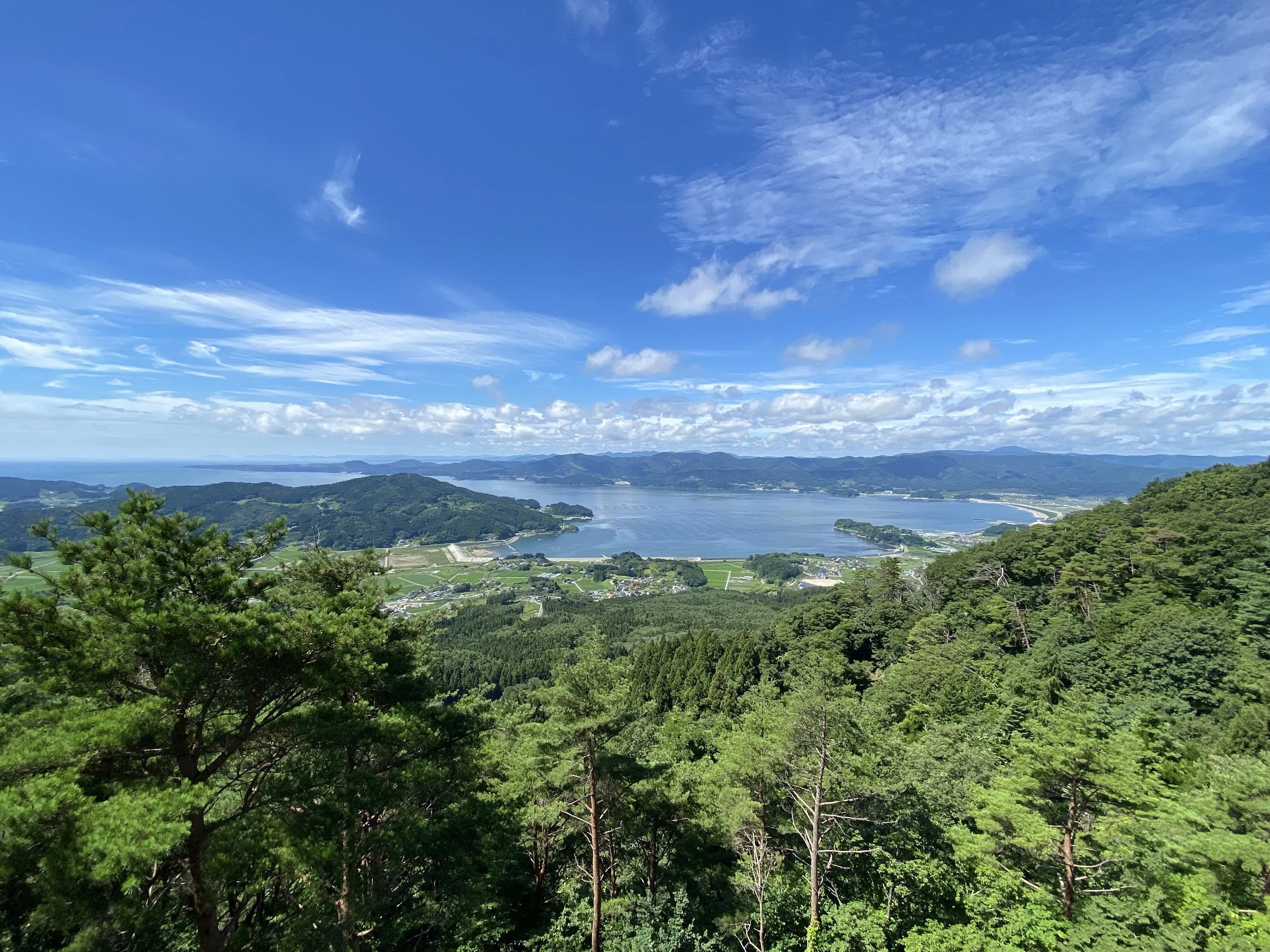
Photo By: Y.Hara, View of Rikuzentakata and Hirota Bay, 2022
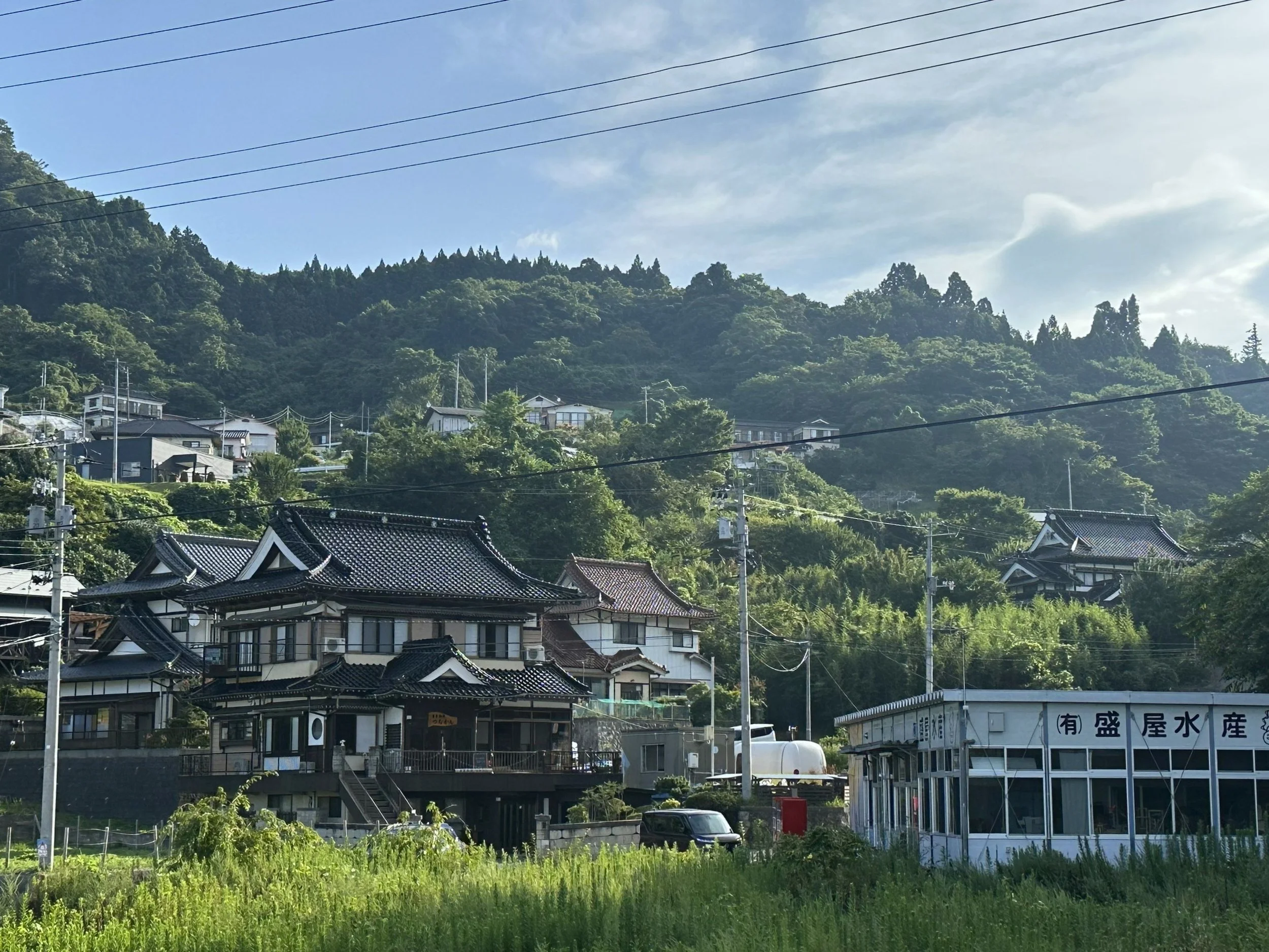
Photo By: Y. Hara; A grand cluster of fishermen's houses on the Karakuwa Peninsula, Kesennuma, built by master carpenters from Rikuzentakata, 2025
Abstract
This case study investigates the spatio-temporal nexus of disasters, nature, and development in Japan’s Sanriku region, focusing on Rikuzentakata City and its surrounding areas. Faced with various severe disasters, Sanriku suffered repeated catastrophic tsunamis throughout the 20th and 21st centuries. Yet, the sea also brings immense bounties, enriching local lives. Furthermore, seamlessly bound to this coastline lies a vast expanse of mountain forests, where communities historically fostered a harmonious, co-prosperous, and interdependent relationship between mountain and coastal livelihoods.
Despite this complex history, disaster recovery discourse has focused predominantly on coastal infrastructure, leaving profound relational ties—between mountain and coastal communities, and between people and these interconnected ecosystems—largely overlooked. By broadening this perspective, however, deep interconnections between these coastal challenges, hydrometeorological disasters, forest fires, and wildlife damage begin to emerge.
Modern socio-economic shifts, including World War II, postwar afforestation, rapid economic growth, depopulation, and previous tsunami reconstruction projects, have significantly reshaped this delicate balance. Employing a mixed-methods approach combining century-long quantitative GIS mapping with qualitative resident interviews, this study is situated within the broader project’s "Disaster-Development" and "Risk-Value" frameworks. Rather than viewing historical changes as local failures, it examines the "Optimization" Paradox through the lens of world-ecology, analyzing how systemic, anthropocentric adaptations to global markets ironically breed new vulnerabilities. In doing so, this study frames these disasters not as isolated events, but as slow-onset phenomena driven by complex multi-hazard dynamics and deep-seated historical root causes.
By shedding light on mountain-coast mutual aid, mountain-side philosophy, and these multi-hazard risks, the project unlocks the insights embedded in local practices. Ultimately, this study leverages Sanriku’s rich history of coexistence to prompt a paradigm shift away from Eurocentric environmental governance toward a pluriverse of worldviews, paving the way for holistic, deeply contextualized global resilience policies.
Author: Yuta Hara
Associate Professor in Global Environmental Studies, Tohoku University Geographer
Full Bio [Here]